Are Electric Fireplaces Safe for Kids & Pets? | Expert Guide
When you’ve got little ones crawling around or a curious dog who investigates everything with their nose, fireplace safety stops being an abstract concern. It becomes the thing that keeps you up at night. I get it. The image of a toddler’s hand reaching toward a flame or a cat’s tail swishing too close to a heat source is enough to make any parent or pet owner reconsider the whole fireplace idea altogether.
So let’s talk honestly about electric fireplaces and family safety. Not the marketing version where everything is perfect and worry-free, but the real conversation about what these units can and can’t do, what precautions still make sense, and whether an electric fireplace might be the right choice for your household.
The Temperature Reality: What Actually Gets Hot
Let’s start with the most important question: how hot do electric fireplaces actually get?
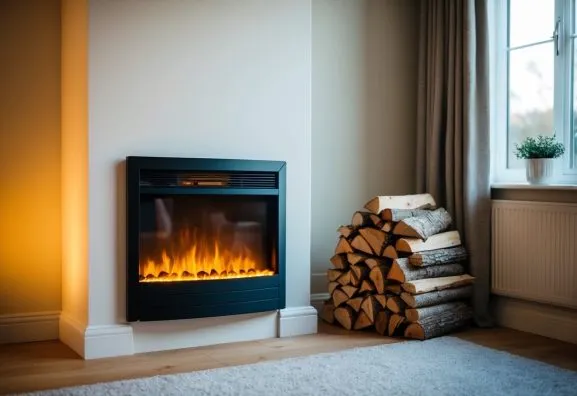
The flame effect you see in an electric fireplace is produced by LED lights and mirrors or a combination of water vapor and light technology. The flames themselves generate essentially no heat. You could put your hand right through them, and you’d feel nothing but room temperature air. That’s fundamentally different from a gas or wood fireplace, where the flames are actual fire.
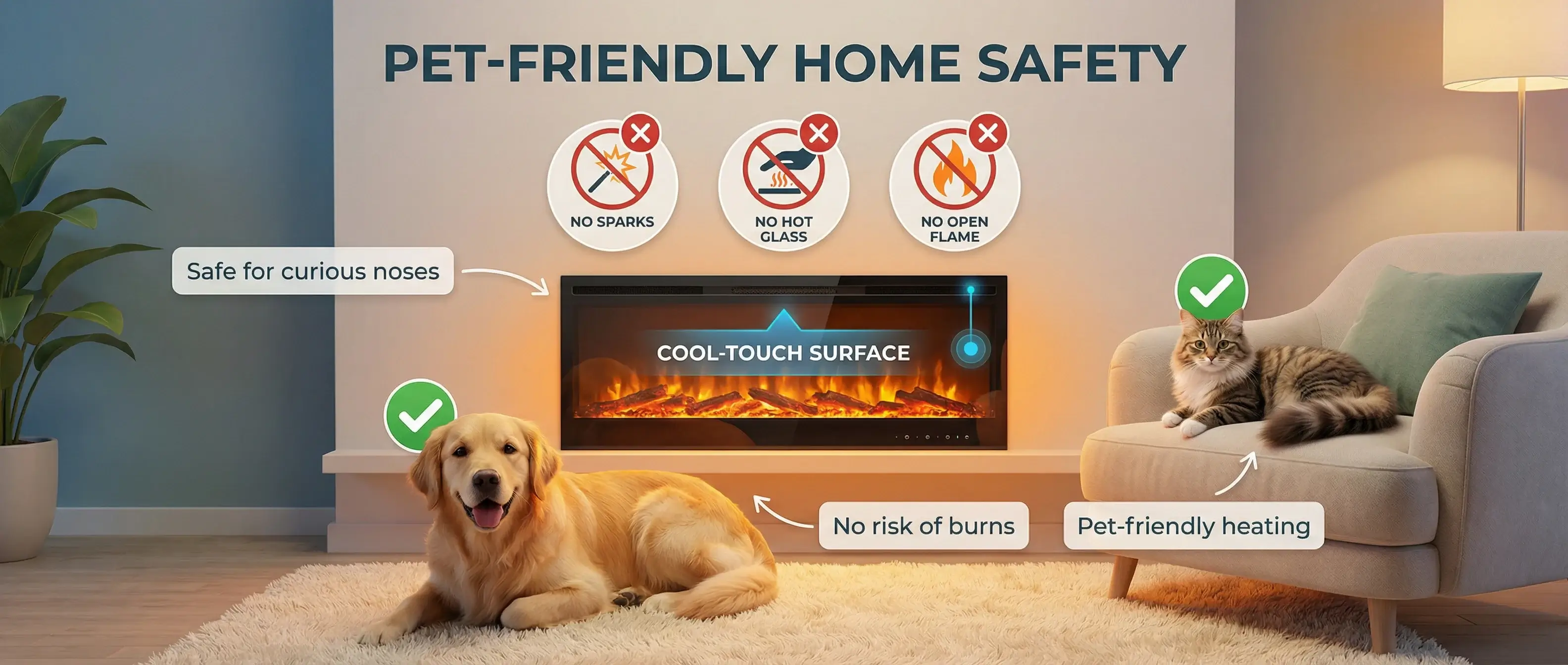
The heat in an electric fireplace comes from a separate heating element, usually located at the bottom or top of the unit. This heating element works like a space heater, using electricity to warm air that’s then circulated into the room. The glass front of most electric fireplaces stays cool to the touch during normal operation. Some manufacturers advertise “cool to touch” glass as a specific feature.
However, “cool to the touch” doesn’t mean ice cold. After running for several hours, the glass on many models will be noticeably warm, though not hot enough to cause burns on brief contact. The heating vents themselves can get quite warm because this is where the heated air exits. It’s not scalding hot like a wood stove, but it’s warm enough that you wouldn’t want a child pressing their face against it.
Some higher-end models feature heat-free operation, meaning the flame effect runs independently of the heater. These units stay genuinely cool throughout, making them the safest option if you have very young children or pets who simply won’t stay away from things they shouldn’t touch.
How Electric Fireplaces Compare to Other Options
Context helps here. When we talk about fireplace safety for families, we’re really asking: is this safer than the alternatives?
Versus Wood-Burning Fireplaces
Wood-burning fireplaces involve actual combustion. The flames are real, the embers are real, and surfaces routinely exceed 400 degrees Fahrenheit. Sparks can pop out onto the hearth, logs can roll, and curious hands can grab fireplace tools or try to touch the flames. Wood fireplaces also require supervision whenever they’re lit. You can’t just turn them off and walk away.
Electric fireplaces eliminate all of these concerns. There’s no combustion, no sparks, no embers, no carbon monoxide, and no need for a protective screen to catch flying debris. From a pure safety standpoint, electric wins decisively.
Versus Gas Fireplaces
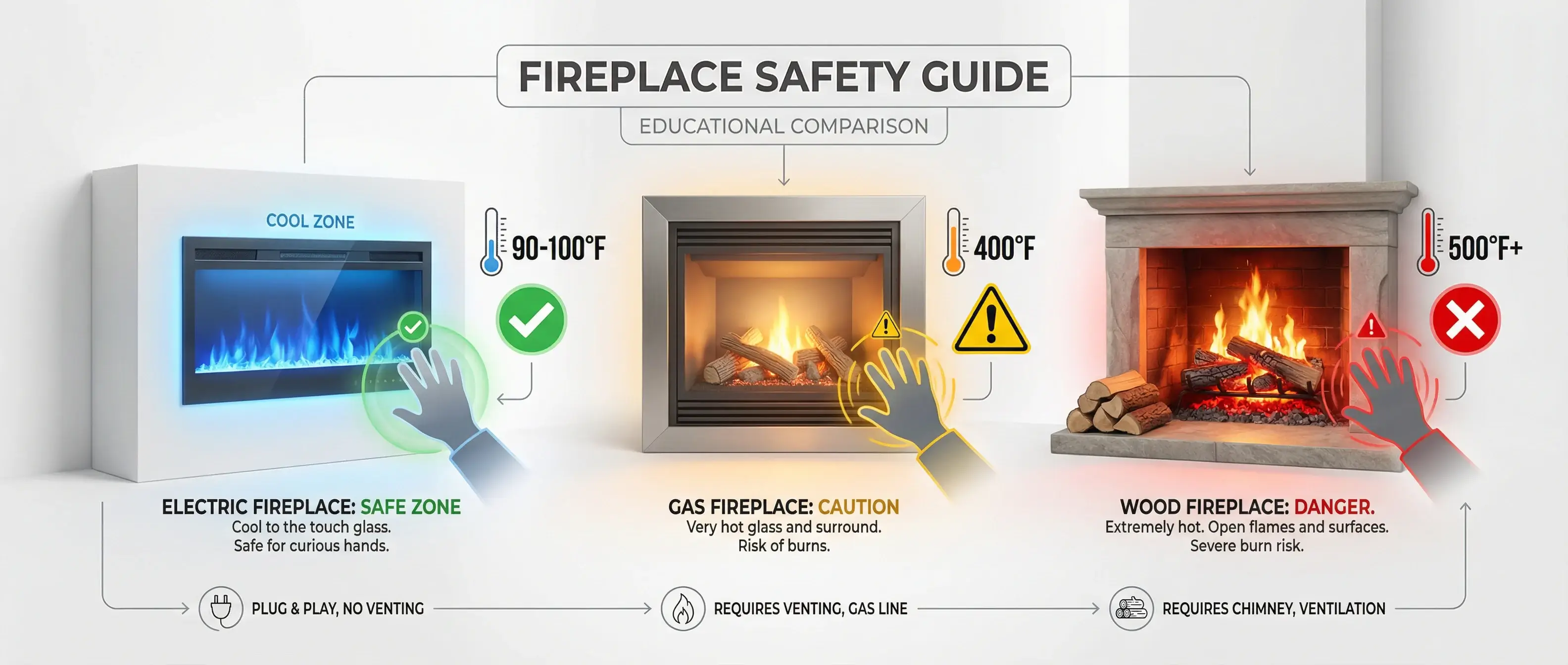
Gas fireplaces produce real flames, and the glass fronts of many models get extremely hot. Hot enough to cause serious burns within seconds of contact. This has been a significant concern in the fireplace industry, with documented cases of children receiving severe burns from touching gas fireplace glass. Newer gas fireplace designs include protective screens and other safety measures, but the fundamental risk remains.
Gas fireplaces also involve combustion, which means carbon monoxide is a concern, though modern vented units handle this safely when properly maintained. Still, it’s an additional worry that electric simply doesn’t have.
Versus Space Heaters
If we’re honest, many electric fireplaces are essentially space heaters with a pretty face. But they’re generally safer than portable space heaters because they’re designed to be stationary and often wall-mounted, eliminating tip-over risks. The heating elements are also enclosed within the unit rather than exposed. A knocked-over space heater with an exposed heating element is a fire hazard. A wall-mounted electric fireplace isn’t going anywhere.
Built-In Safety Features Worth Looking For
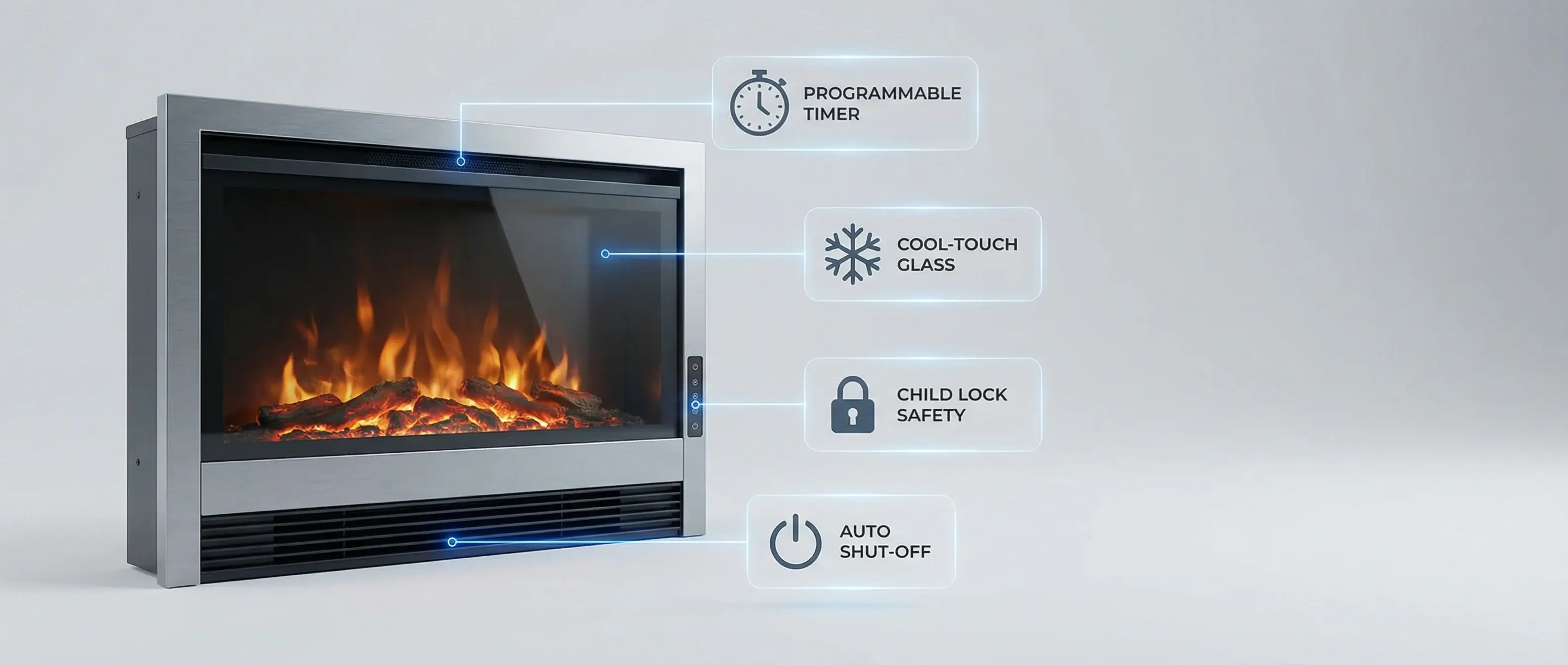
Not all electric fireplaces are created equal when it comes to safety features. Here’s what to look for when shopping with family safety in mind.
Automatic Shut-Off
Most quality electric fireplaces include overheat protection that automatically shuts off the heater if the unit gets too hot. This prevents the fireplace from becoming a hazard if something blocks the vents or if there’s a malfunction. It’s a standard feature on most models, but verify it’s included on any unit you’re considering.
Timer Functions
Timers let you set the fireplace to turn off automatically after a certain period. This is great for bedtime. You can enjoy the ambiance while falling asleep without worrying about leaving it running all night. It also provides peace of mind if you’re the type to wonder “did I turn that off?” after leaving the house.
Child Lock Features
Some electric fireplaces include child lock functionality on the controls, requiring a specific sequence to operate or preventing changes to settings without unlocking first. This prevents curious toddlers from turning the unit on or cranking the heat to maximum when you’re not looking.
Cool-Touch Glass
As mentioned earlier, cool-touch glass is a specific design feature, not just marketing speak. Units with this feature use insulated glass or maintain airflow patterns that keep the front surface cool even during heating operation. If you have very young children who are likely to touch everything, this feature is worth prioritizing.
Enclosed Heating Elements
The heating element should be fully enclosed within the unit, with no accessible hot surfaces. The heated air should exit through vents that are designed to be warm but not dangerously hot. Avoid any model where you can see or access the heating coils directly.
What About Pets?
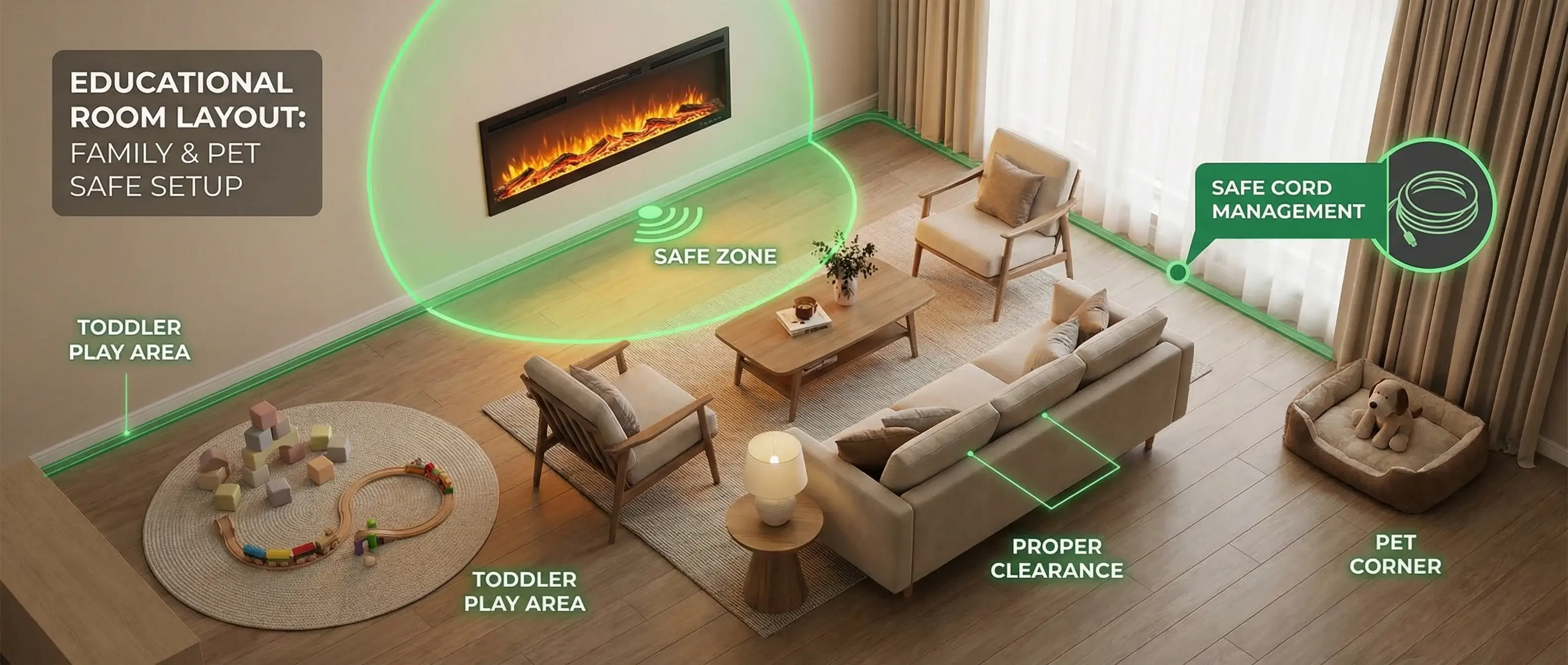
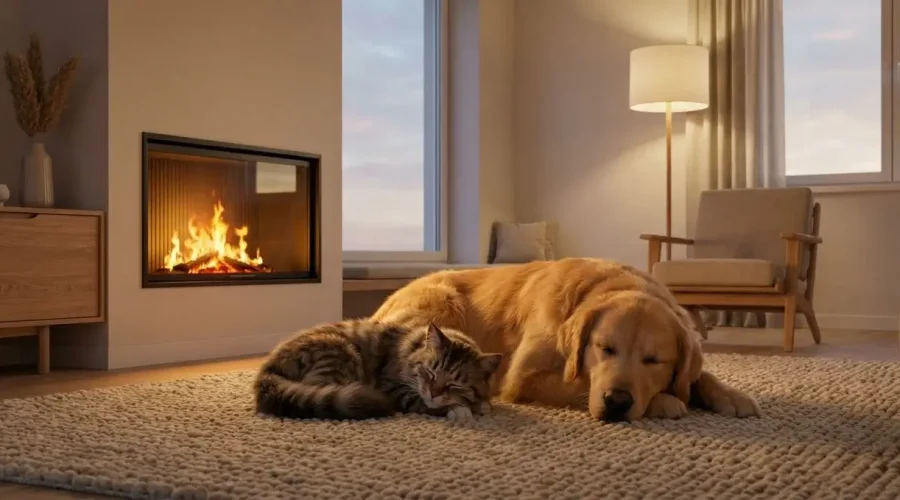
Pets and fireplaces have a complicated relationship. Dogs and cats are drawn to warmth, and many will happily park themselves directly in front of any heat source. With traditional fireplaces, this creates obvious dangers. With electric fireplaces, the situation is significantly safer, but there are still considerations.
Dogs
Dogs generally do well with electric fireplaces. The main concern is a large dog’s tail knocking into a freestanding unit or the dog lying so close to the heat vents that they overheat themselves. Neither of these is a serious safety hazard, but they’re worth thinking about. Wall-mounted or built-in units eliminate the tip-over concern entirely.
I’ve talked to plenty of dog owners who say their dogs love the electric fireplace. They curl up nearby for the warmth without any of the safety concerns that would come with a traditional fireplace.
Cats
Cats are more unpredictable. A cat might jump on top of a mantel-style electric fireplace or try to bat at the flickering flames. Most cats lose interest once they realize the flames aren’t real.
The bigger concern with cats is fur. Long-haired cats lying directly against warm heating vents for extended periods could theoretically develop hot spots in their fur. While rare, it’s worth monitoring initially.
Small Pets
Rabbits, guinea pigs, and other small pets that free-roam should be kept away from electric fireplaces, primarily because of the cords. Chewing on electrical cords is dangerous regardless of what they power.
Practical Safety Tips for Families
Even with an inherently safer heating option, some common-sense precautions make sense for families with children and pets.
Teach children early that the fireplace is not a toy. Establishing boundaries early creates good habits around all heat sources.
Consider placement carefully. Wall-mounted units or safety gates can help keep young children at a safe distance.
Manage cords so children and pets can’t pull or chew them. Never run cords under rugs.
Keep the area around the fireplace clear of blankets, toys, or pillows to ensure proper airflow.
Use flame-only mode when young children are playing nearby for maximum safety.
The Bottom Line
Electric fireplaces are significantly safer than traditional options while still providing warmth and ambiance.
No open flames, no combustion risks, no carbon monoxide, and surfaces that stay cool or only mildly warm.
With basic precautions, electric fireplaces offer peace of mind for families with kids and pets.
If safety has been holding you back, an electric fireplace may be the solution that gives you both comfort and confidence.
Have questions about which electric fireplace is safest for your family? Our team specializes in helping families find the right fit. Reach out for personalized recommendations.