

What Size Electric Fireplace Do I Need? | Room Guide
You’ve decided an electric fireplace is the right choice for your home. Smart move. No chimney to worry about, no gas lines to run, and you can actually use the thing in the middle of summer just for the ambiance. But now comes the question that trips up most people: what size do you actually need?
Here’s the thing—getting the size wrong isn’t just about aesthetics (though a tiny fireplace in a massive living room does look a bit sad). It’s about whether the unit can actually heat your space effectively, how much you’ll spend on electricity, and whether you’ll be happy with your purchase five years from now.
I’ve helped hundreds of homeowners figure this out, and I’m going to walk you through the same process I use. No complicated formulas you’ll forget tomorrow—just practical guidance you can actually use.
Understanding BTUs (Without the Engineering Degree)
BTU stands for British Thermal Unit, and it measures heating capacity. One BTU is the amount of energy needed to raise the temperature of one pound of water by one degree Fahrenheit. Exciting stuff, right?
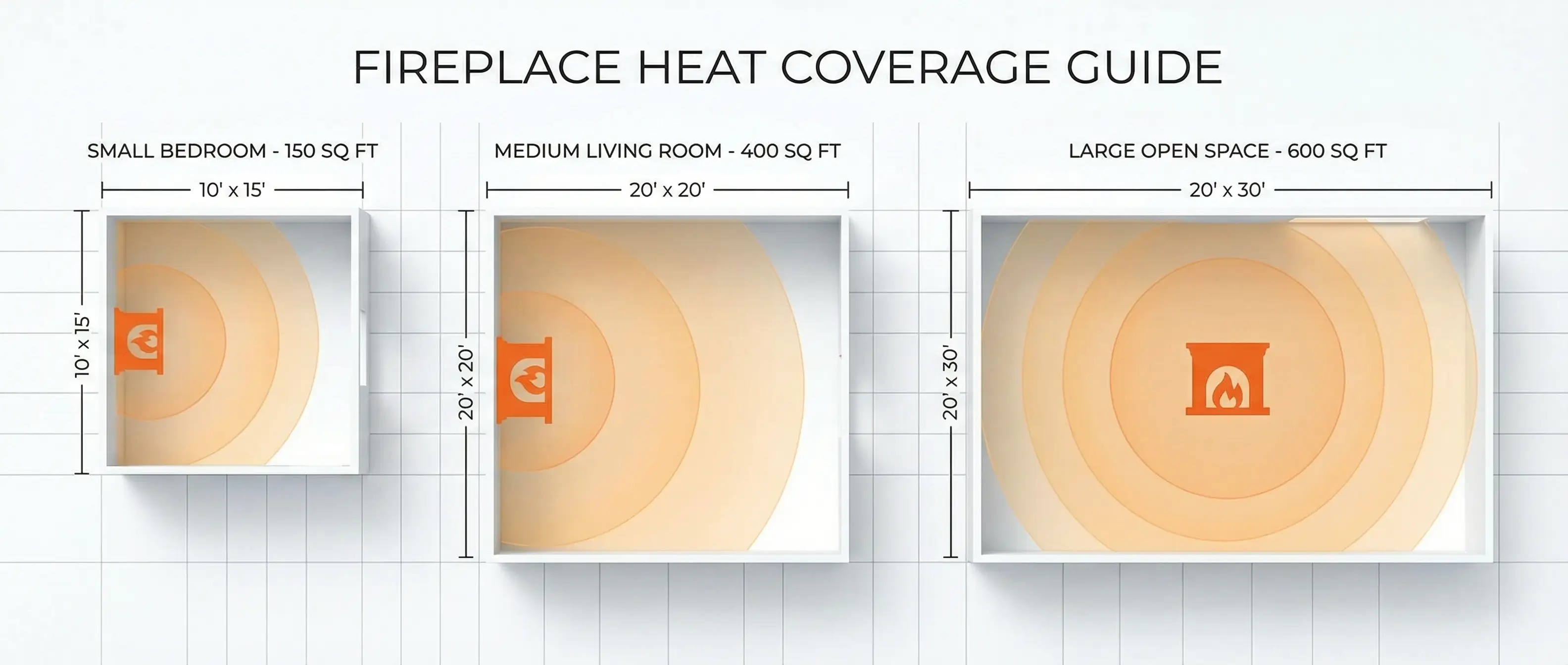
What actually matters to you is this: most electric fireplaces produce between 4,000 and 9,000 BTUs. A standard 1,500-watt electric fireplace puts out roughly 5,100 BTUs per hour. That’s enough to comfortably heat a room of about 400 to 500 square feet as the primary heat source, or supplement heating in larger spaces.
The general rule of thumb is 10 watts per square foot of space. So a 150 square foot bedroom needs about 1,500 watts, while a 300 square foot living room needs closer to 3,000 watts if you want the fireplace to do the heavy lifting on heating.
But here’s where it gets interesting—and where most generic guides fail you. These calculations assume average ceiling heights, decent insulation, and moderate climate. Your situation might be completely different.
The Factors That Change Everything
Before you start measuring your room, you need to think about a few things that can dramatically affect what size fireplace you need.
Ceiling Height
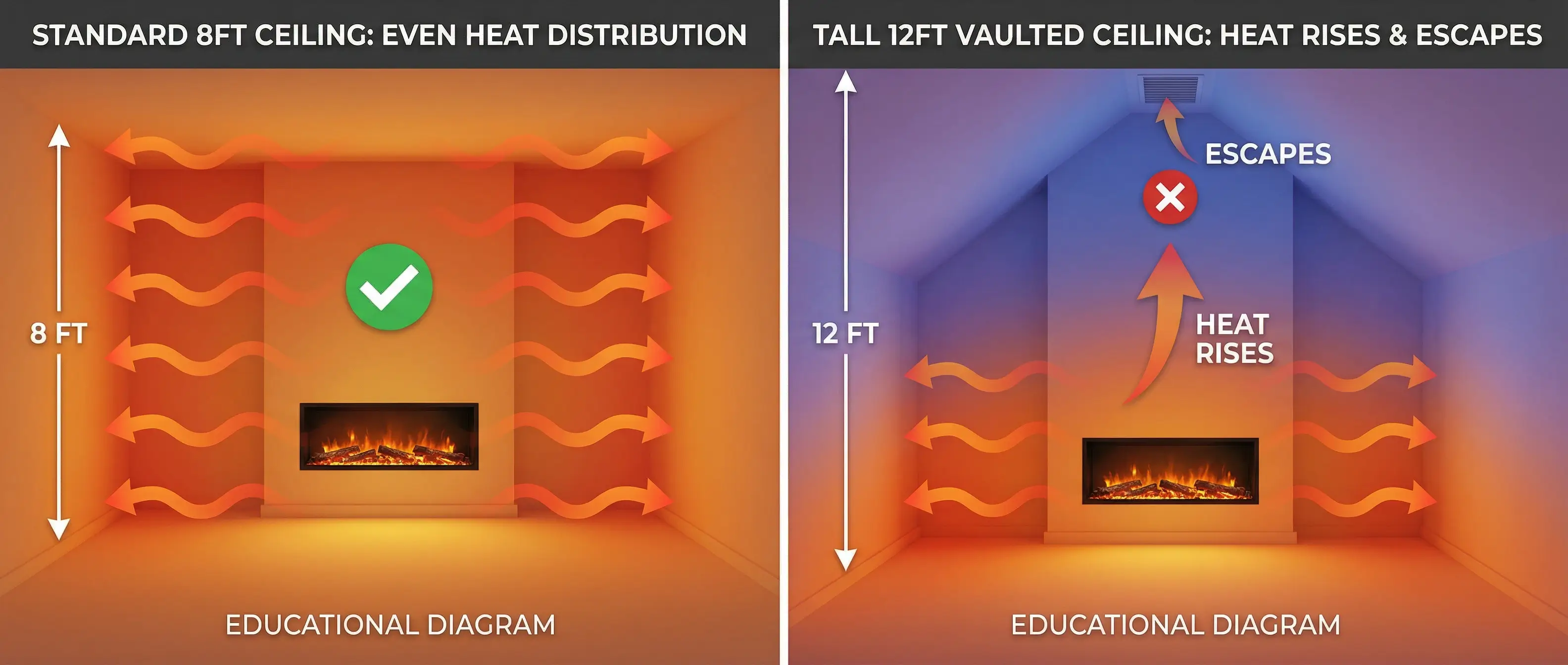
Those 10-foot ceilings in your Victorian home look gorgeous, but they also mean more air to heat. The standard calculations assume 8-foot ceilings. If yours are higher, you’ll need to bump up your BTU requirements by about 25% for every two feet of additional height. That cathedral ceiling in your great room? You might want to consider a larger unit or accept that the fireplace will be more about ambiance than serious heating.
Insulation Quality
A well-insulated modern home holds heat like a thermos. An older home with original windows and minimal wall insulation? Heat escapes faster than you can generate it. If your home is drafty, plan on sizing up. If you’ve recently upgraded your insulation and windows, you might be able to get away with a smaller unit than the square footage suggests.
Climate and Geographic Location
This one seems obvious, but people forget it all the time. If you’re in the Pacific Northwest where temperatures rarely drop below freezing, your heating needs are vastly different from someone in Minnesota dealing with subzero winters. An electric fireplace that works as a primary heat source in Portland might only be suitable as supplemental heat in Minneapolis.
Room Layout and Traffic
Open floor plans are tricky. That 400 square foot living room that opens into a 200 square foot kitchen and a hallway? You’re not really heating 400 square feet—you’re heating a much larger connected space. On the flip side, a 400 square foot room with a door you keep closed will heat up much faster and stay warm longer.
Room-by-Room Sizing Guide
Let me break this down by where you’re actually planning to put the fireplace, because different rooms have different priorities.
Living Room (The Most Common Choice)
For most living rooms between 300 and 500 square feet, a standard 1,500-watt electric fireplace with around 5,000 BTUs will do the job nicely. This is where most people put their electric fireplace, and manufacturers design their products with this space in mind.
Larger living rooms—say 500 to 800 square feet—might benefit from a unit with dual heating elements or a higher BTU output around 8,000 to 9,000. Or, honestly, accept that the fireplace will provide zone heating for the seating area rather than heating the entire room evenly.
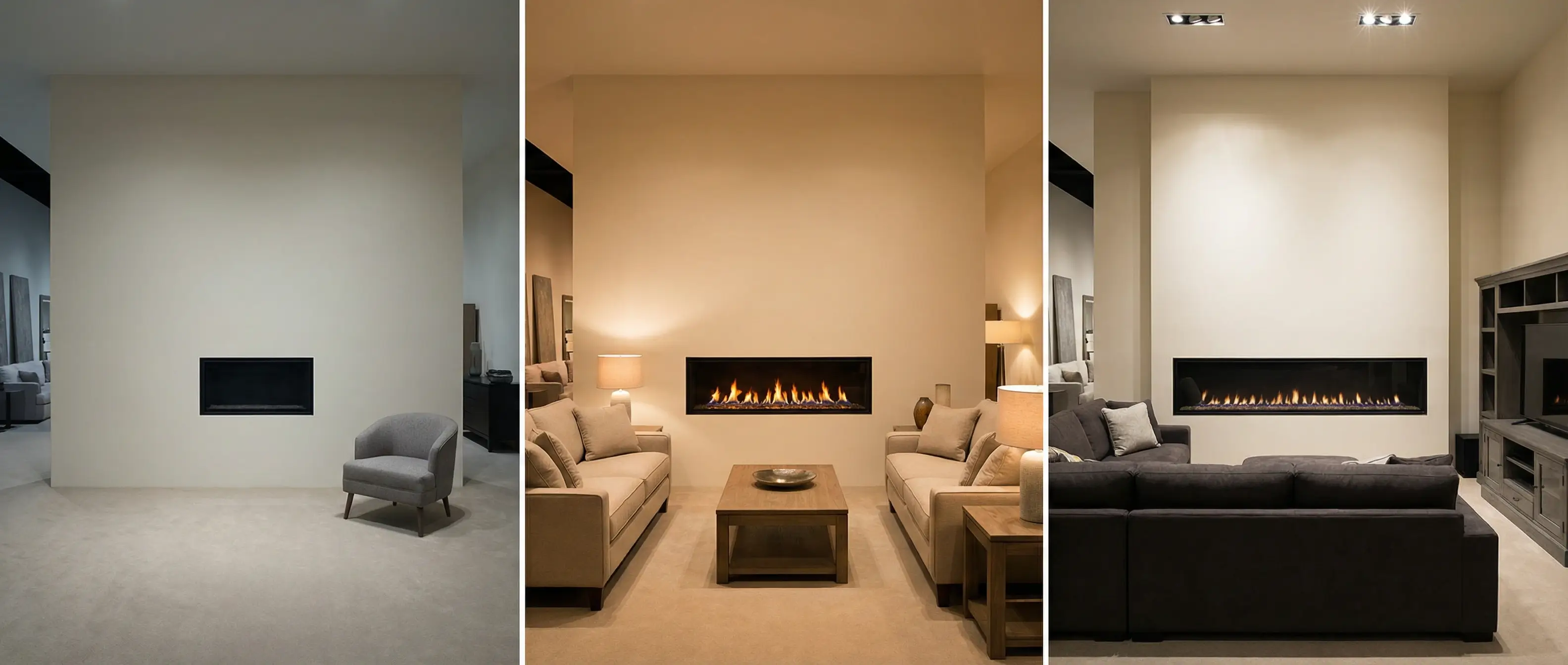
As for the visual size of the fireplace itself, most designers recommend a fireplace width that’s between one-third and one-half the width of the wall it’s mounted on. A 60-inch linear fireplace looks proportional on a 12-foot wall but overwhelming on an 8-foot wall.
Bedroom (Comfort and Safety)
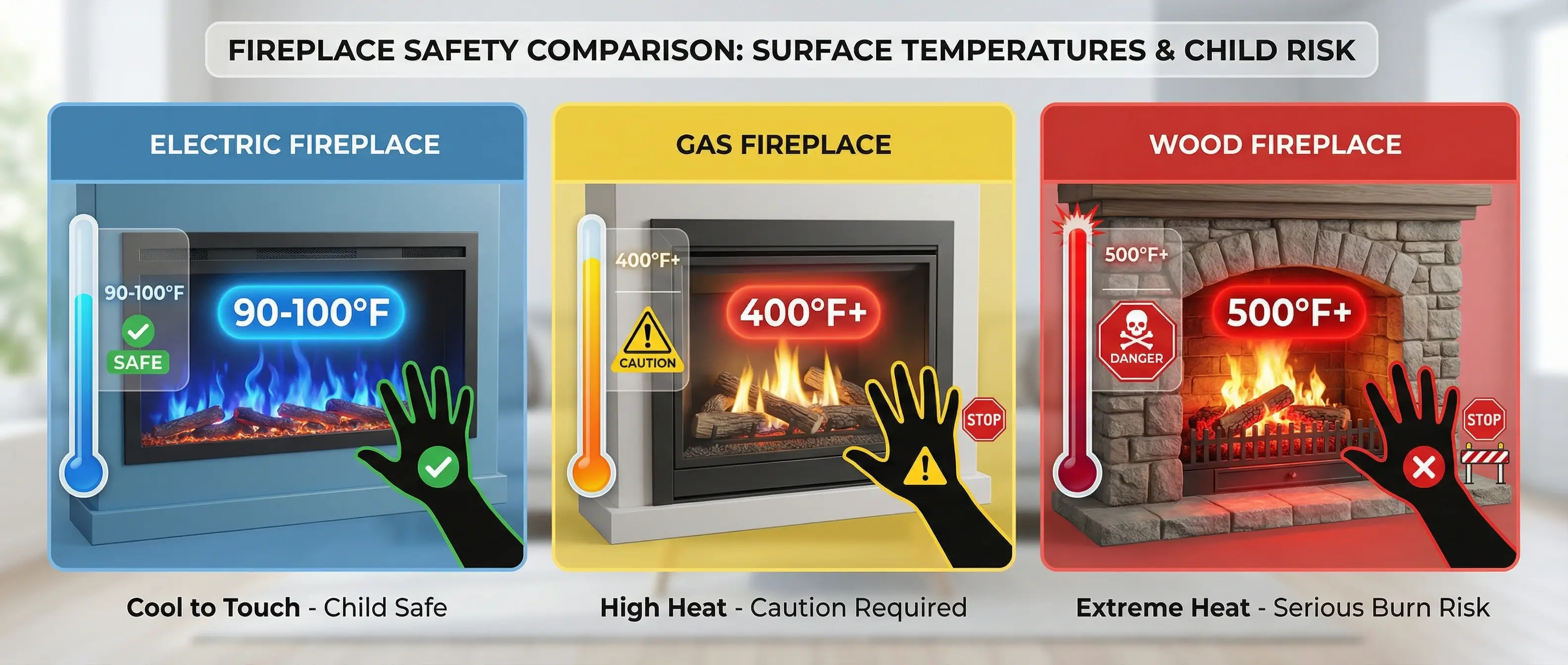
Bedrooms are usually smaller, and you want gentle, even heat rather than a blast of warmth. For a standard 150 to 250 square foot bedroom, a smaller electric fireplace around 1,000 to 1,500 watts is plenty. Many bedroom-appropriate models come with built-in thermostats and timers—features you’ll appreciate when you want the room warm when you wake up but don’t want to run it all night.
Visually, bedroom fireplaces tend to work better at a smaller scale. A 36 to 42-inch unit often looks more appropriate than the 50 to 60-inch models popular in living rooms.
Basement or Rec Room
Basements present unique challenges. They’re typically cooler than the rest of the house, may have less insulation, and often have concrete floors that stay cold. If you’re planning to use an electric fireplace as a primary heat source in a basement, size up. A 600 square foot finished basement might need closer to 7,000-8,000 BTUs to feel comfortable, especially if the space has exterior concrete walls.
On the bright side, basements usually have lower ceilings, which helps contain the heat better than a room with vaulted ceilings.
Home Office
Working from home has made the home office electric fireplace a popular choice. These rooms are often smaller—100 to 200 square feet—so a compact electric fireplace or even a freestanding electric stove can be perfect. You want enough heat to stay comfortable during long work sessions without making the room feel stuffy.
Consider a model with adjustable heat settings so you can dial it back during intense focus work or turn it up during those winter afternoon slumps.
Matching Fireplace Type to Your Space
Size isn’t just about heating capacity—it’s also about what type of electric fireplace works best in your room.
Electric Fireplace Inserts
If you have an existing fireplace opening, an insert is your best bet. These are designed to fit standard fireplace dimensions—typically 28 to 33 inches wide for traditional openings. The key measurement here is your existing firebox. Measure the width, height, and depth, then choose an insert that fits comfortably with a little room to spare for proper air circulation.
Wall-Mounted Fireplaces
These range from compact 36-inch models to dramatic 72-inch or longer linear designs. Wall-mounted fireplaces work great in modern spaces and can serve as a focal point similar to a mounted TV. The key consideration here is wall strength—make sure your wall can support the weight, especially for larger units that can weigh 100 pounds or more.
Built-In Fireplaces
Built-ins offer the most customization options but require more planning. These can be recessed into walls or incorporated into custom cabinetry. If you’re going this route, work with the fireplace dimensions during the design phase—retrofitting a built-in fireplace into existing construction is possible but adds cost and complexity.
Freestanding Electric Stoves and Mantels
These plug-and-play options need floor space rather than wall space. Measure the footprint carefully and make sure you have at least 36 inches of clearance on all sides for safety and aesthetics. Mantel packages typically range from 40 to 60 inches wide and need a wall to back against, even though they’re not mounted.
Practical Tips From the Field
After years of helping people choose electric fireplaces, here are the things I wish everyone knew before they started shopping.
First, always measure your space before falling in love with a particular model online. I can’t tell you how many times someone has called me excited about a beautiful 60-inch fireplace only to realize their wall is 58 inches wide once you account for the corners.
Second, think about your electrical situation. Most electric fireplaces run on standard 120-volt outlets, but they draw significant power—usually close to the maximum 15 amps that a typical circuit can handle. Don’t plan to run your electric fireplace on the same circuit as other major appliances. If you’re doing a built-in installation, consider having a dedicated circuit installed.
Third, consider the flame-only mode. One of the best features of electric fireplaces is the ability to run the flame effect without any heat. This means you can enjoy the ambiance year-round, which changes the value proposition. If ambiance is your primary goal, you might choose a larger, more visually impressive unit even if its heating capacity is overkill for your space.
Finally, think about future flexibility. If you’re in a rental or think you might move in the next few years, a freestanding or wall-mounted unit that can come with you makes more sense than a custom built-in. If you’re in your forever home, invest in the installation that looks the most integrated and permanent.
When to Call in a Professional
While electric fireplaces are generally DIY-friendly, there are situations where professional help makes sense.
If you’re doing a built-in installation that requires cutting into walls, running new electrical, or building custom surrounds, hiring a professional ensures the job is done safely and looks polished. The same goes for mounting heavy units on walls—especially if you’re not confident about locating studs or if your walls are plaster rather than drywall.
Professional consultation is also valuable if you’re trying to heat a challenging space—like a sunroom with lots of windows, a room over a garage, or a space with unusual dimensions. An experienced installer can help you figure out whether an electric fireplace is the right solution and, if so, what size and placement will work best.
Making Your Decision
Choosing the right size electric fireplace comes down to balancing three things: heating needs, visual proportion, and practical constraints.
Start with your room’s square footage and the basic 10-watts-per-square-foot guideline. Adjust up for high ceilings, poor insulation, or cold climates. Adjust down for well-insulated spaces, mild climates, or if the fireplace is supplementing existing heating rather than serving as the primary source.
Then consider the visual aspect—make sure the fireplace size is proportional to your wall and room. A fireplace that’s too small looks like an afterthought; one that’s too large dominates the space in an uncomfortable way.
Finally, check the practical details: electrical capacity, mounting requirements, and clearances.
When in doubt, don’t hesitate to reach out to a professional installer who can assess your specific situation and make personalized recommendations. The right electric fireplace, properly sized for your space, will provide years of warmth and enjoyment. Getting it right is worth the extra effort upfront.
Ready to find the perfect electric fireplace for your home?
Browse our curated selection of top-rated electric fireplaces, or contact our team for personalized recommendations based on your specific room and heating needs.